Heimtextil’s vision for the future of textiles
Both AI-enhanced and radically human
‘Craft is a verb’ That is the title Alcova Milano has given this year's theme at trade fair Heimtextil 2026, and it is a deliberate provocation. Not craft as object, not craft as nostalgia, but craft as action - as a continuous, evolving practice that responds to the world as it changes. "Craft and its relevance in relation to technology is the broader frame of this year's research," Alcova explains. "We believe that craft is a deliberate act, it comes back when technology moves forward and something important gets left behind." In an age where AI can generate, optimise, and scale production endlessly, what returns is the need for closeness—to materials, gestures, and things that feel undeniably human.
Alcova's presentation unfolds through 4 subthemes:
Designers are techno-craftspeople
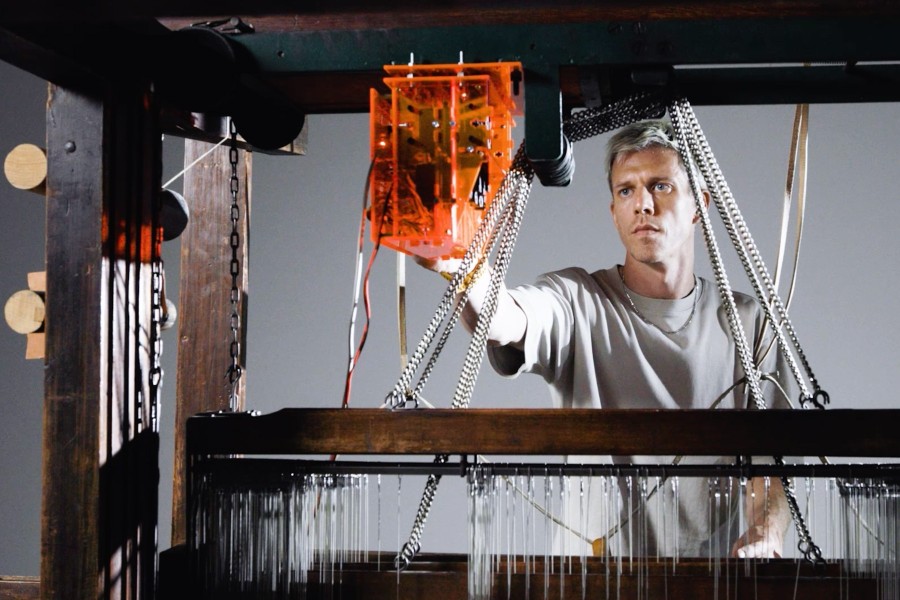
This theme explores a new kind of co-working: between AI and craftspeople, where the machine extends the hand, rather than replacing it.
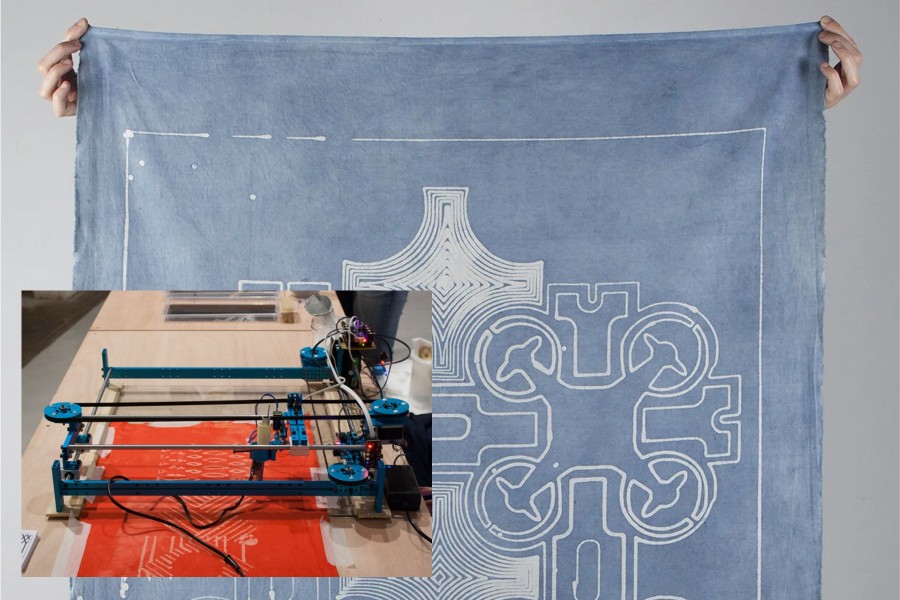
Visible co-work describes objects where craft and code dissolve: AI-enhanced, human-finished. Think of Eugenia Morpurgo and Olivia de Gouveia's Digital Wax Print series, where digital fabrication meets wax-resist dyeing, each method extending the other's possibilities. Jos Klarenbeek's "Hack the Heritage" work exemplifies this—textiles that wear their making process visibly.
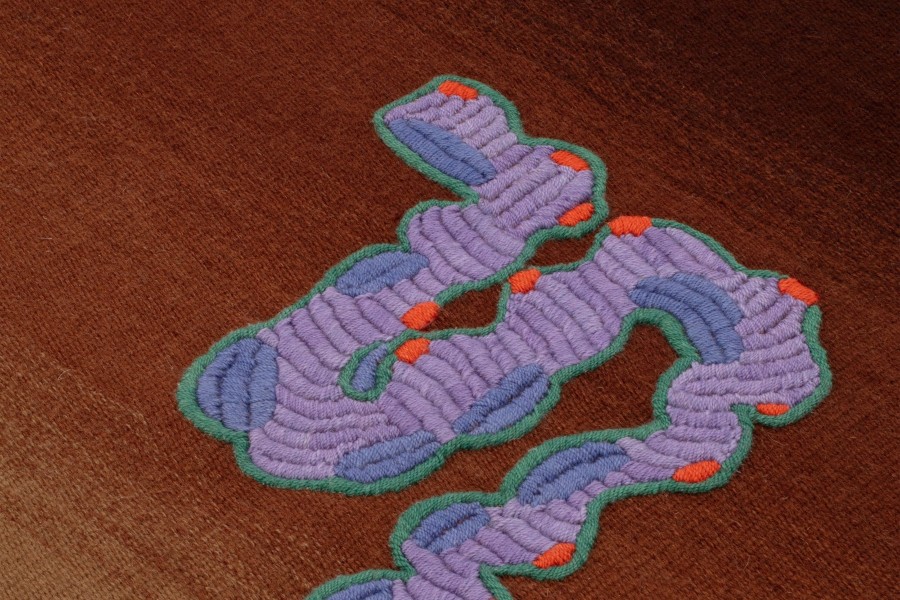
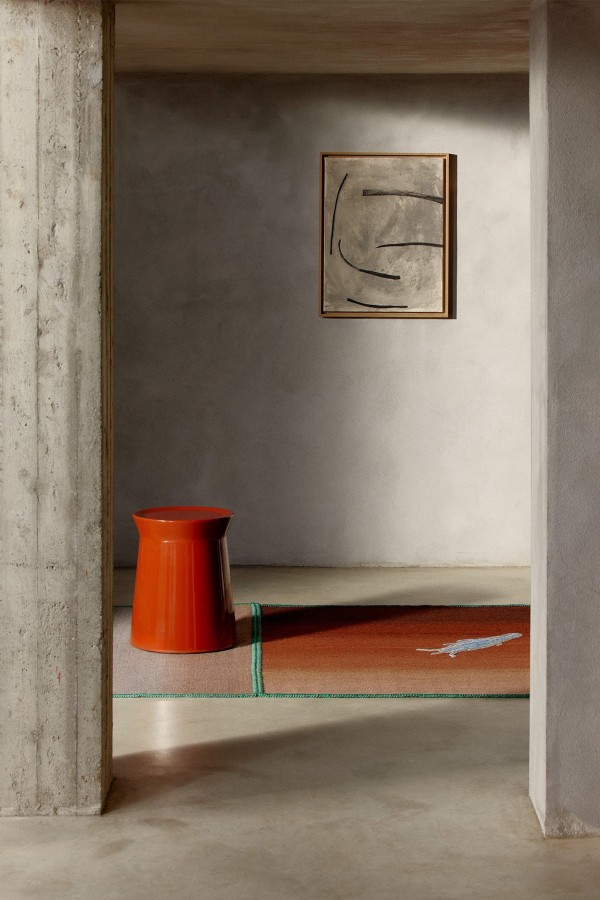
A playful touch celebrates small decorations and handmade ornament. Patricia Urquiola's work for cc-tapis exemplifies the hand.
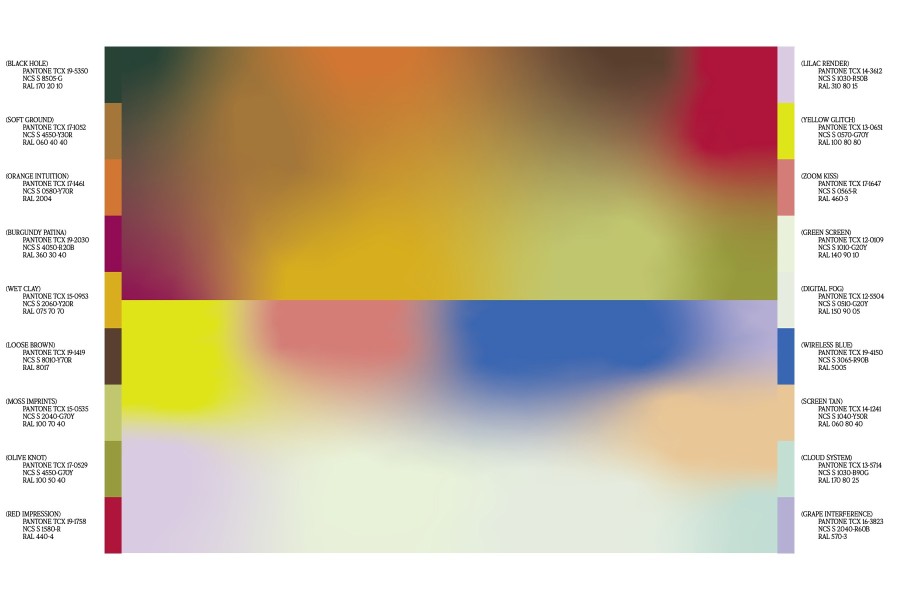
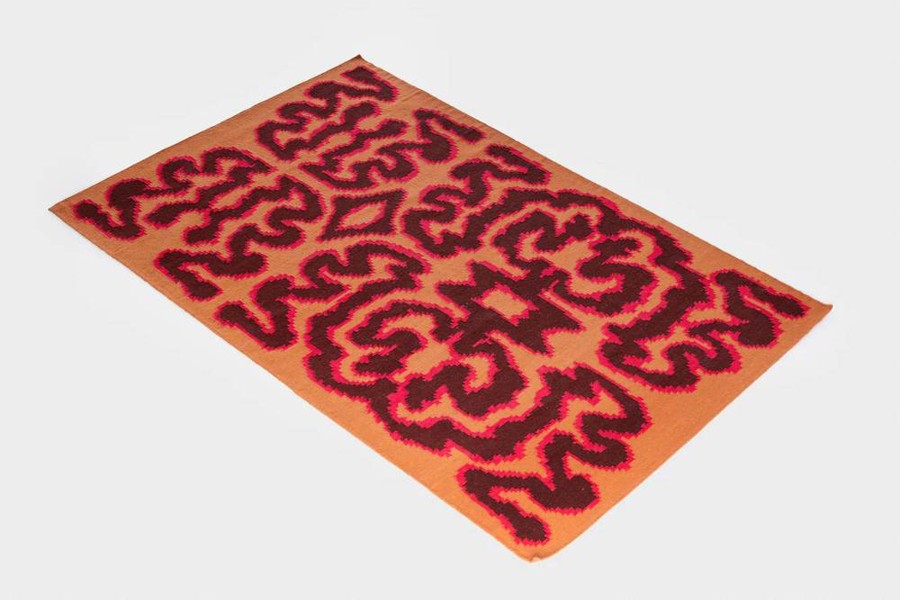
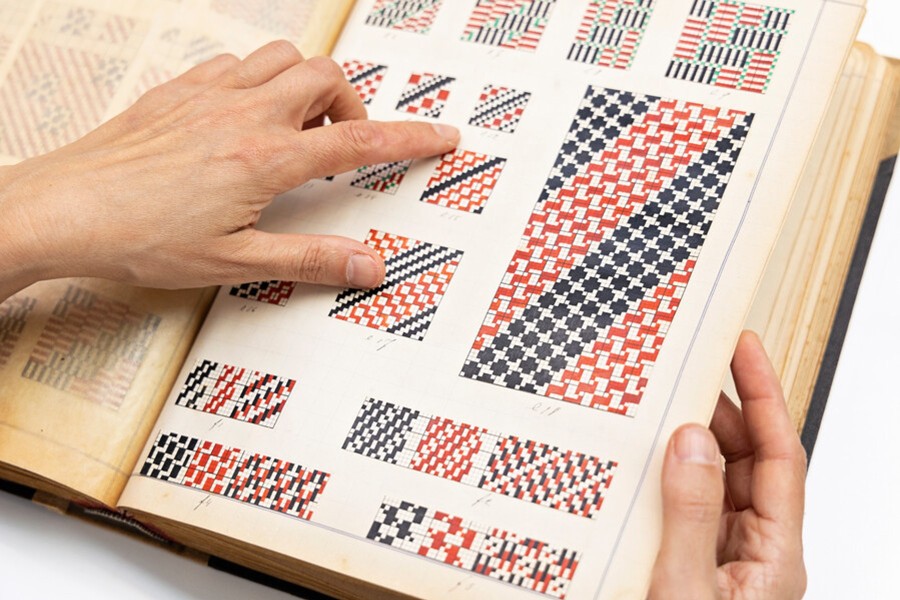
Re:media is all about textiles that come from a change of medium: a drawing becomes a digital image, then turns into a jaquard or a hand-stitched pattern. In Stefania Ruggiero's Ember Rug or Jonas Hejduk's work you can see the traces of that transformation.
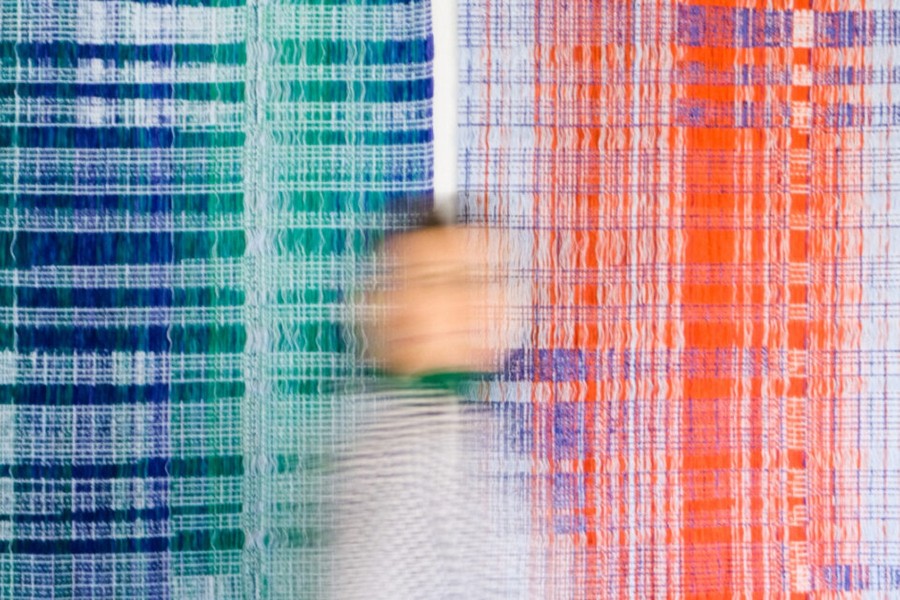
Crafted irregularity weaves with slubs, uneven dye patterns, visible seams. "These materials don't hide the hand, they highlight it," Alcova notes, "celebrating unpredictability and chance." Emma Terweduwe’s work rejects symmetry and uniformity in favour of raw delicacy and unfinished aesthetic.
Beyond circular: replenish!
Running beneath these aesthetic territories is textile researcher Janis Jefferies' call to abandon ‘circular economy’ language. The textile industry needs new vocabulary: replenish.
Where circular thinking focuses on closing loops, replenish thinking asks: what grows back? What feeds the soil? Bio-textiles and plant-based alternatives represent a shift away from petroleum-based fibres towards materials that restore ecosystems whilst they produce. A return to plant-based fabrics with contemporary knowledge embedded within cultivation.
This transforms sourcing from transaction to relationship. It means working with growers, not suppliers. Making material strategy inseparable from land stewardship.
Textiles as embodied knowledge
There is deeper significance in textiles. The word ‘textile’ derives from Latin ‘texere’ - to weave - suggesting textiles may have been fundamental to communication before written language. As Jefferies observes, "thread, twining, and knotting are among the oldest arts, foundational not just for products but for social structures." Early textiles were systems for calculating and measuring—laying groundwork for mathematical principles.
This repositions craft not as decorative but as embodied intelligence.
When the Luddites resisted industrial textile production in the 19th century, they opposed exploitation, not technology. Later, khadi cotton in India and indigo production in Bangladesh became sites where textile choices carried political weight, where making meant autonomy.
Connection and proximity
For businesses working in handmade and sustainable textiles, Alcova's insights centre on proximity as strategy. Can you trace fibres to their source? Is human labour visible? What ‘imperfections’ are actually selling points? Will tomorrow’s textile factories look more like weavers cottages than Ford’s assembly line (as the Economist stated)?
The makers Alcova showcases create valuable objects because they carry embedded knowledge, connecting material to maker to meaning in ways industrial production cannot achieve. As Alcova Milano argues, makers today "don't just use or absorb" technology - "they bend it, oppose it," working in ways that permit doubt and experimentation.
Craft is a verb. It's something makers do, something that adapts and responds. The future of textiles isn't about rejecting technology but understanding that the hand carries knowledge machines haven't learned yet—and that this connection is precisely what the market increasingly craves.
Heimtextil trade fair takes place in Frankfurt Germany from January 13-16, 2026


Craftscurator is visiting Heimtextil 2026 to meet with manufacturers and buyers of sustainable home textiles. Will you be exhibiting or visiting? Let Irene know and let's meet in Frankfurt!